
—An exploration of seaside elegance, unexpected art, and quiet moments along Croatia's Adriatic coast.—
Along Croatia's northern Adriatic coast, Opatija is a town where elegant seaside architecture, graceful promenades, and the gentle rhythm of the sea evoke the charm of another era.
Once a fashionable retreat for European aristocracy during the Austro-Hungarian era, Opatija still retains much of its old-world elegance. Grand hotels overlook the waterfront, lush gardens soften the streets, and unexpected works of art invite a closer look.
As I explored Opatija, I found myself drawn not only to its celebrated landmarks but also to the smaller discoveries — an intriguing sculpture, an architectural detail, or a quiet moment beside the sea.
A Town by the Sea
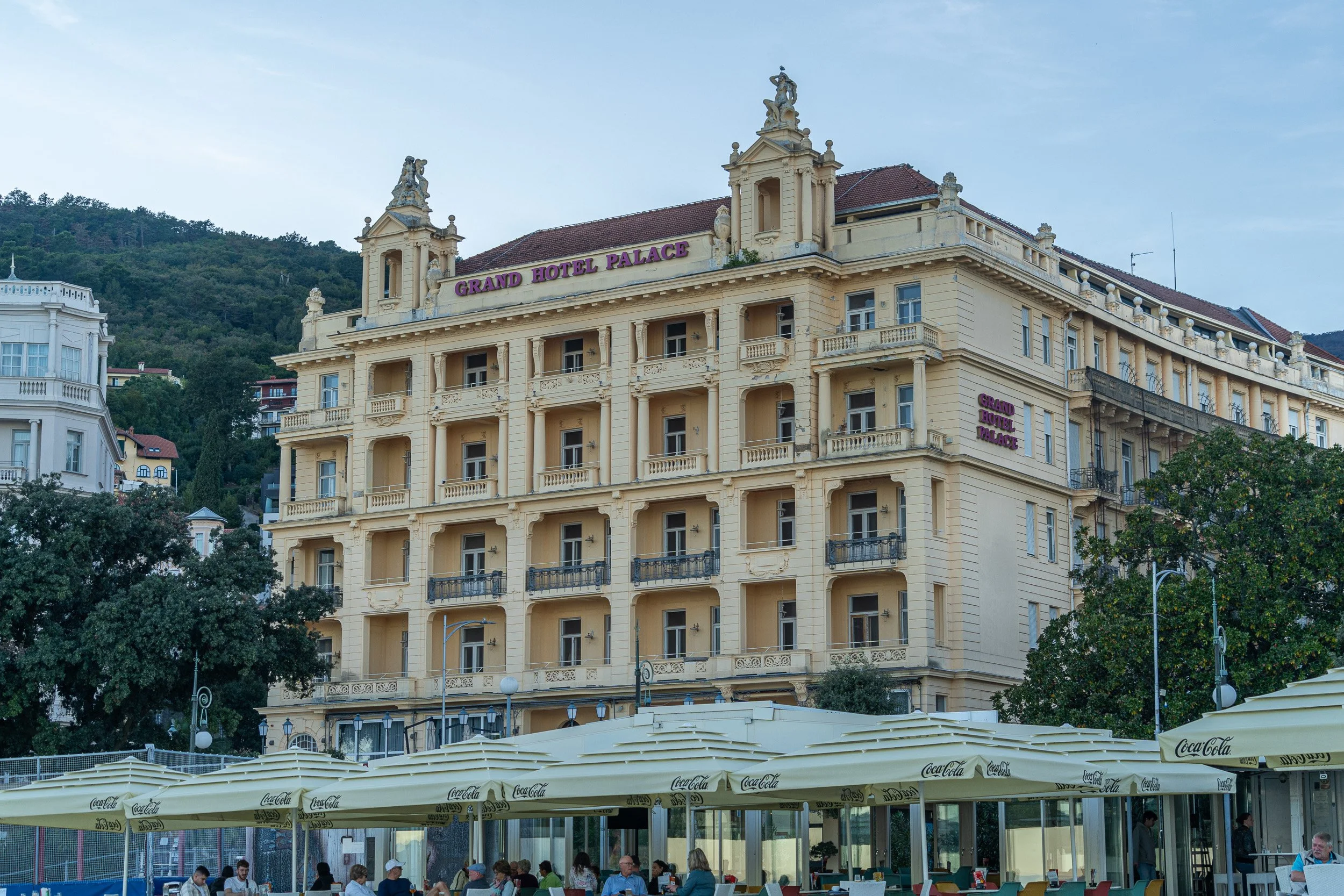
Opatija's architectural elegance offers a glimpse into its past as one of the Adriatic's most fashionable seaside destinations. Its grand hotels and elaborate villas recall an era when visitors came to enjoy the coastal scenery and restorative sea air.
The Grand Hotel Palace reflects that heritage, with its ornate facade, decorative balconies, and stately presence. Yet beneath its historic exterior, the outdoor cafés and everyday activity remind us that Opatija's appeal extends well beyond its celebrated past.
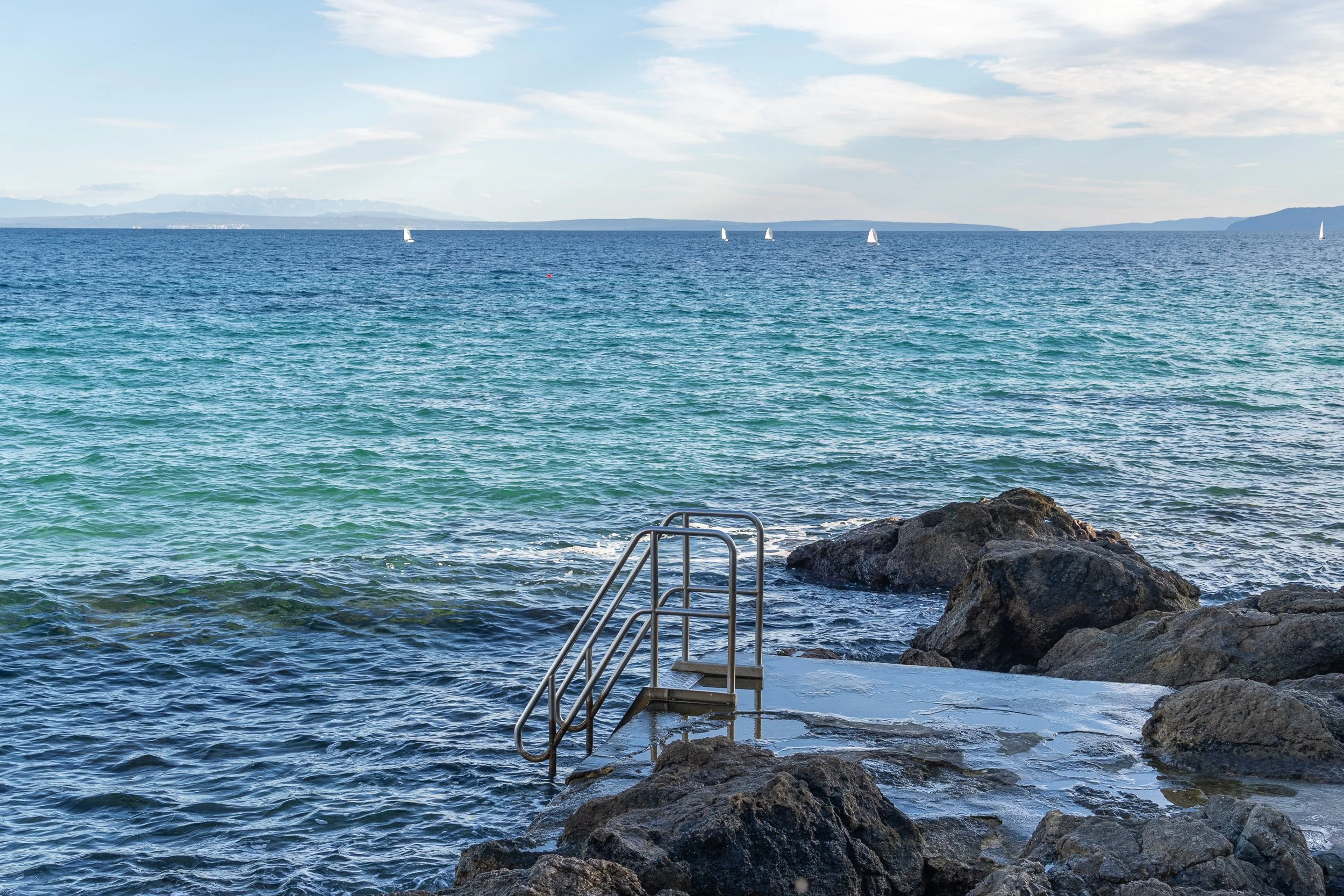
The Adriatic is never far away. Along the rocky shoreline, simple stairways descend directly into the clear blue water, inviting swimmers to enjoy the sea. Beyond the rocks, small sailboats dot the horizon, while the changing shades of blue stretch toward distant mountains.
I was struck by the contrast between these modest swimming entrances and the grandeur of the hotels nearby — two very different expressions of Opatija's enduring relationship with the sea.
Life Along the Waterfront
Beyond its grand hotels and historic architecture, Opatija reveals a quieter, more intimate side along its waterfront.
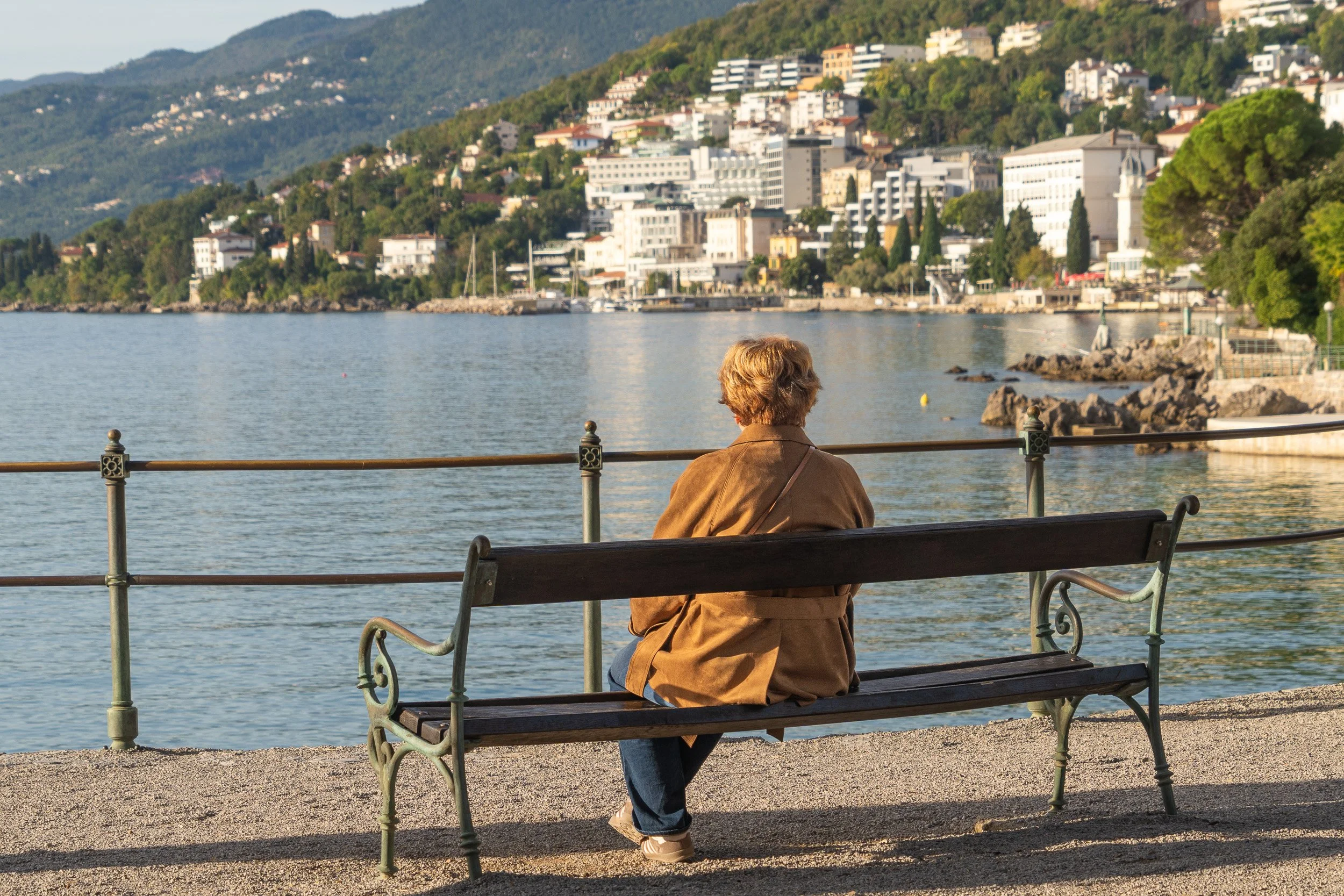
As I wandered beside the Adriatic, I noticed how naturally people seemed to embrace the unhurried pace of life. Benches overlooking the bay invited visitors to pause, while the gentle movement of the water provided a peaceful backdrop.
One scene caught my attention: a woman sitting alone, quietly taking in the view across the bay. There was nothing extraordinary about the moment, and perhaps that was precisely what made it memorable.
A little farther along, two people sat together at the water's edge, absorbed in a small shared moment. Their quiet interaction seemed as natural a part of Opatija as the sea itself.
These were the moments I enjoyed discovering — simple, unposed glimpses of everyday life that revealed something of the town's character.

Art in Unexpected Places
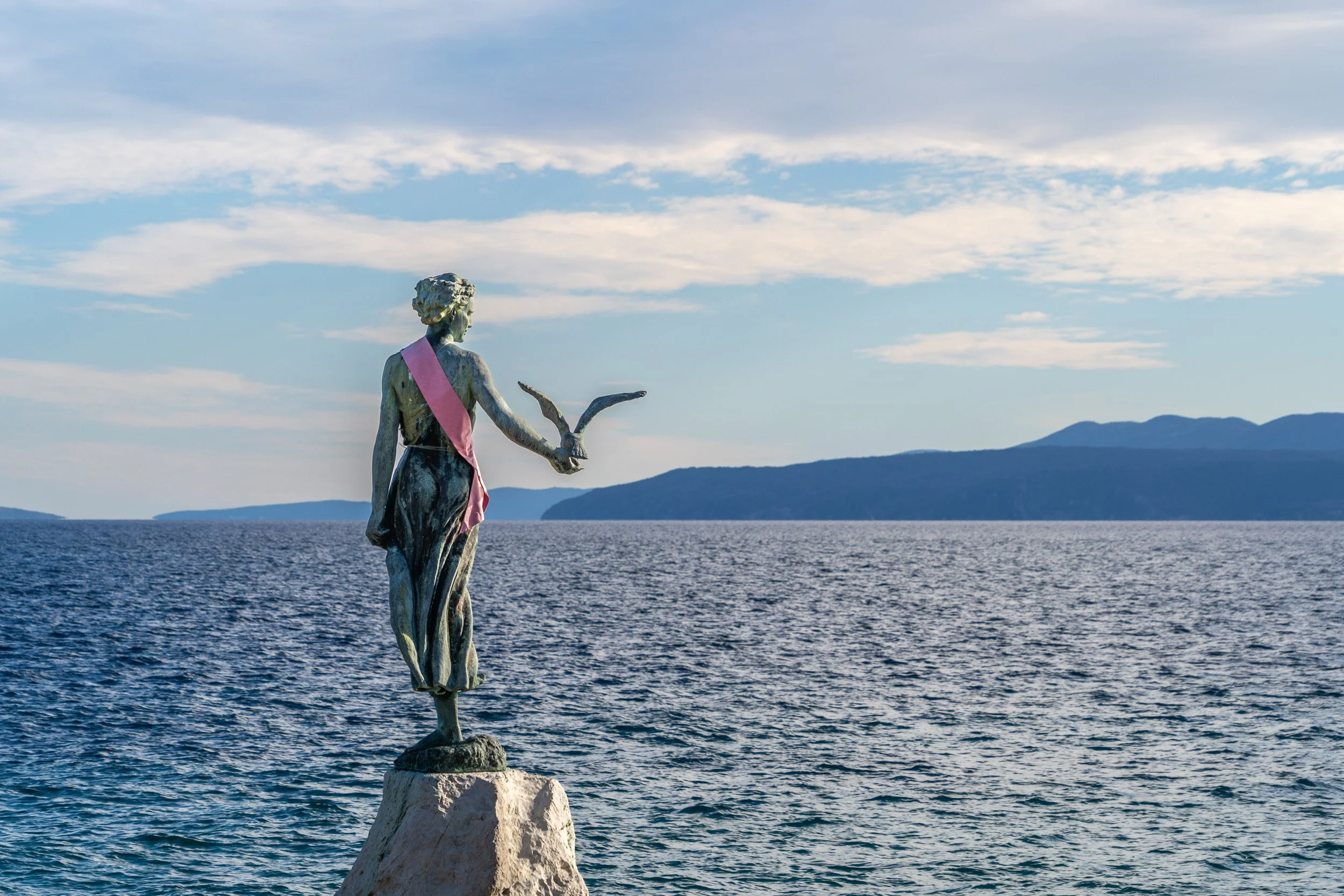
Standing gracefully above the rocky shoreline, the Maiden with the Seagull has become one of Opatija's most recognizable symbols.
Created by sculptor Zvonko Car in 1956, the bronze figure gazes across the Adriatic, a seagull poised upon her outstretched hand.
I was drawn to the sculpture more than once during my visit. From a distance, it seemed almost part of the coastal landscape. Up close, its graceful form and delicate gesture revealed an entirely different character.
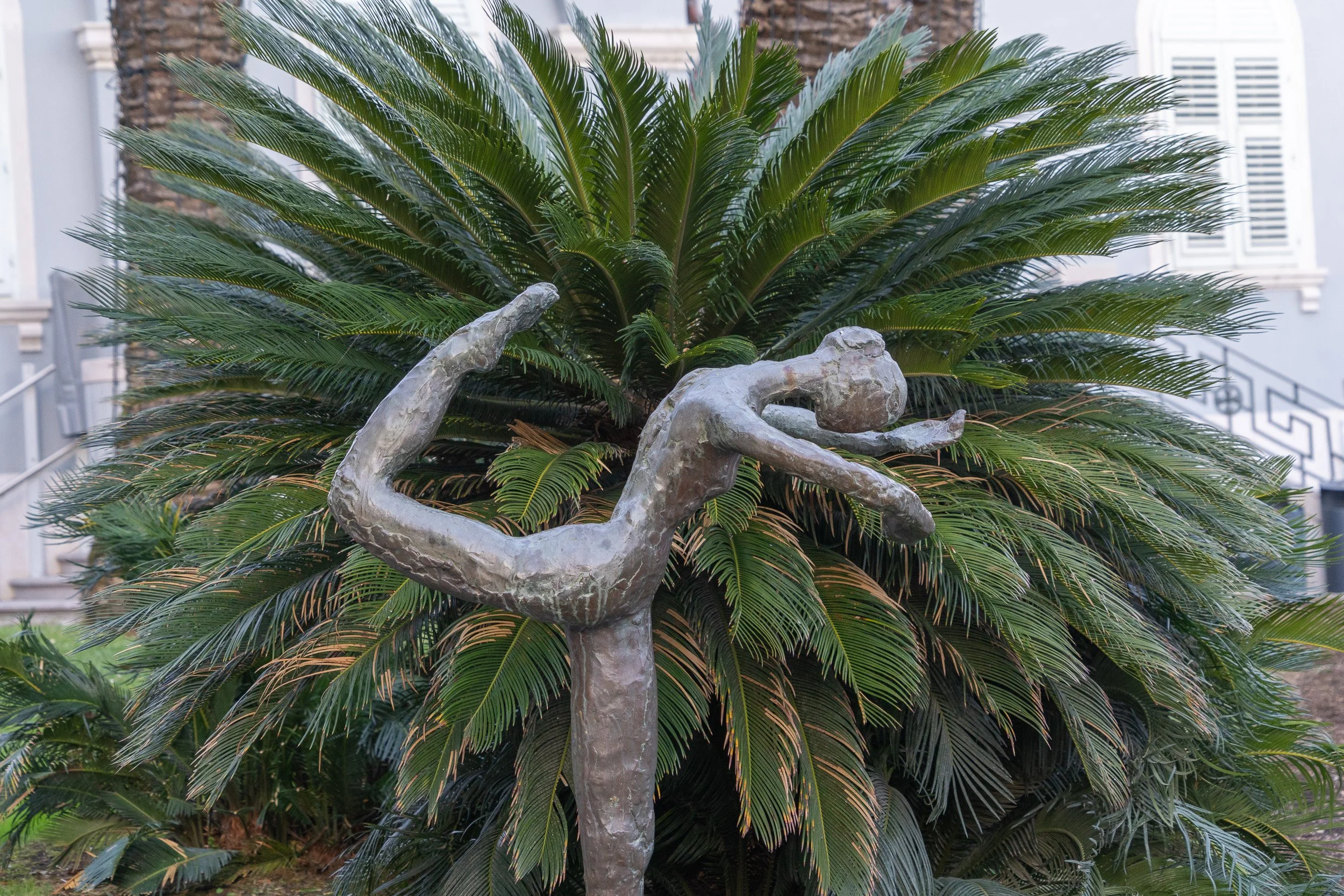
Another artistic discovery introduced me to Isadora Duncan, the pioneering American dancer whose expressive movements helped transform modern dance.
During a visit to Opatija in 1902, Duncan stayed at Villa Amalia, where she became fascinated by palm fronds swaying in the breeze. Their graceful movements would later influence her dancing.
A sculpture honoring Duncan captures that sense of freedom and motion. I was particularly drawn to the way its sweeping form stood against the radiating palm fronds — the dancer and the source of her inspiration brought together in a single composition.
And just when I thought Opatija had revealed its most unusual artistic surprises, I encountered something entirely unexpected — a towering white giraffe holding an elaborate crystal chandelier above the Adriatic.
The playful combination of contemporary sculpture and traditional elegance was irresistible. I couldn't help but smile.
Opatija's Wall of Fame
One of my more unexpected discoveries was a colorful mural tucked beneath a canopy of bamboo. Along a curving wall, portraits of celebrated personalities emerge from a patchwork of geometric colors and weathered masonry.
Among the familiar faces was Albert Einstein, his expressive eyes framed by delicate vines descending across the painted wall. The cracks and faded colors seemed to add another dimension to the artwork, allowing nature and time to become part of the composition.
Nearby, I recognized Isadora Duncan once again. Seeing her likeness painted across the aging stones created an unexpected connection to the sculpture I had encountered earlier.
Two very different artistic expressions celebrated the same remarkable woman and her connection to Opatija.
Explore more of Opatija's Wall of Fame in this short photographic film.
Architectural Details and Small Discoveries
Beyond Opatija's celebrated landmarks, I found myself increasingly drawn to the smaller details that revealed the town's character.
An ornamental fountain caught my attention, its weathered stone adorned with elaborate floral carvings and a sculpted face from which a narrow stream of water flowed.
The delicate craftsmanship, expressive features, and gentle movement of the water transformed an ordinary architectural detail into something worth lingering over.
At the Church of the Annunciation of the Blessed Virgin Mary, I was drawn to the striking symmetry of its neo-Romanesque facade.
A circular rose window anchors the composition, while a series of small decorative arches, known as a Lombard band, creates a graceful rhythm beneath the triangular gable.
Looking more closely, I appreciated how the warm brickwork contrasted with the pale stone, and how the repeating forms led the eye upward toward the cross.
Not every memorable discovery involved history, architecture, or art.
While exploring the town, I came across two cats peering through the openings of an old wooden structure. One appeared to offer a sleepy wink, while the other regarded me with an expression suggesting my presence was barely worth acknowledging.
Their contrasting personalities made for an irresistible photograph — a small, amusing encounter I hadn't anticipated.
When Evening Falls
As the day drew to a close, I found myself once again looking out across the Adriatic.
The mountains had become dark silhouettes against a sky washed in soft shades of peach and pink. A small boat made its way across the water, leaving a gentle wake behind it.
I had arrived expecting a beautiful seaside town. What I discovered was a place filled with character, creativity, and small moments worth remembering.
As the last light faded over the Adriatic, I was reminded that some places leave their strongest impression not through grand experiences, but through the simple pleasure of slowing down and looking a little closer.
Thank you for sharing this journey with me. I hope these photographs and stories remind you that travel is not only about discovering new places, but also about the unexpected connections we find along the way.

Continue the Journey
My travels through Croatia, Slovenia, and Montenegro revealed a wonderful variety of landscapes, historic towns, and unexpected discoveries. Continue the journey with another photographic story from this Adriatic adventure.
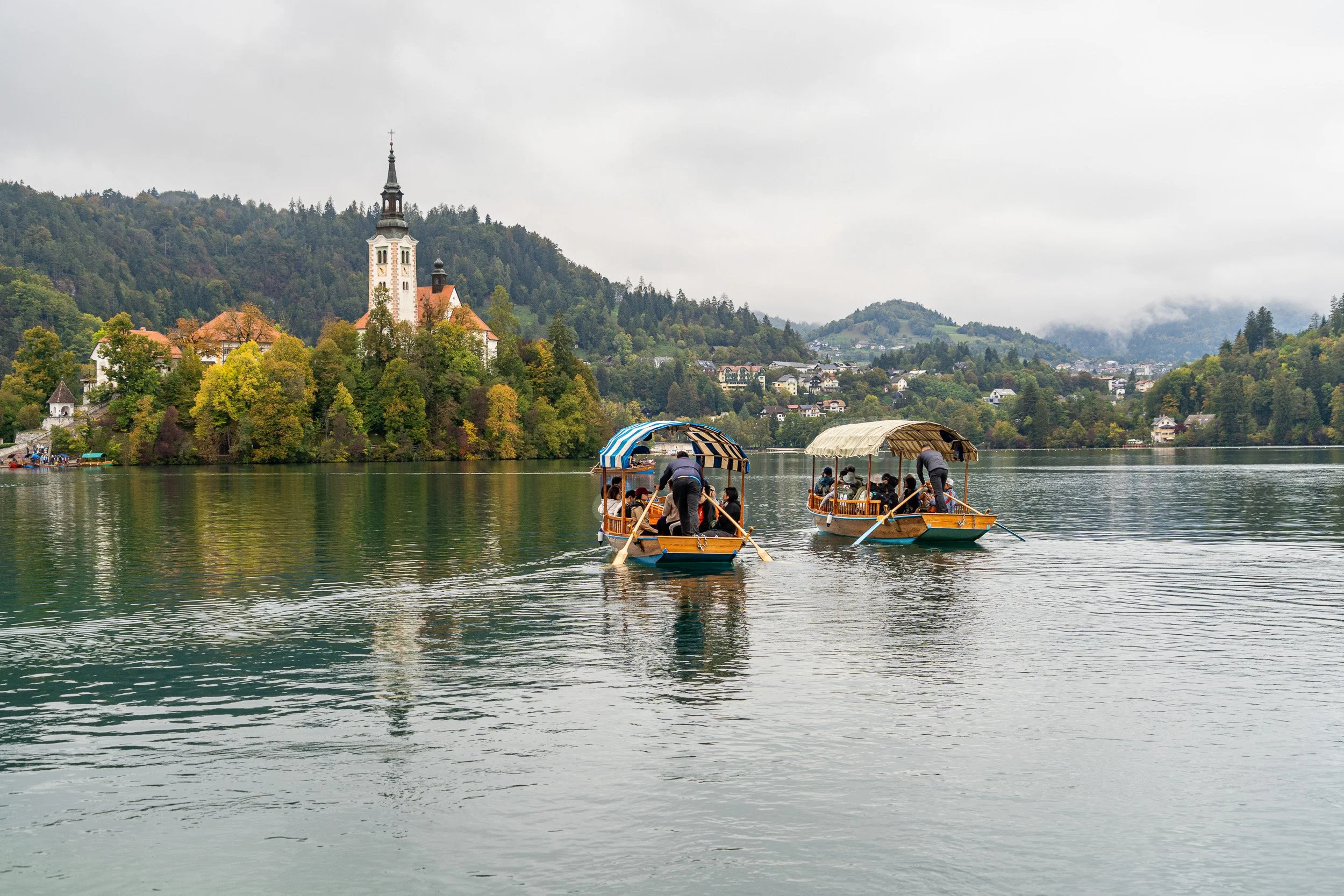
Slovenia — Lakeside Serenity & City Life
From the tranquil waters of Lake Bled to Ljubljana's charming streets and the remarkable underground world of Postojna Cave, discover the landscapes, architecture, and quiet moments that made Slovenia such a memorable part of my journey.